Articles
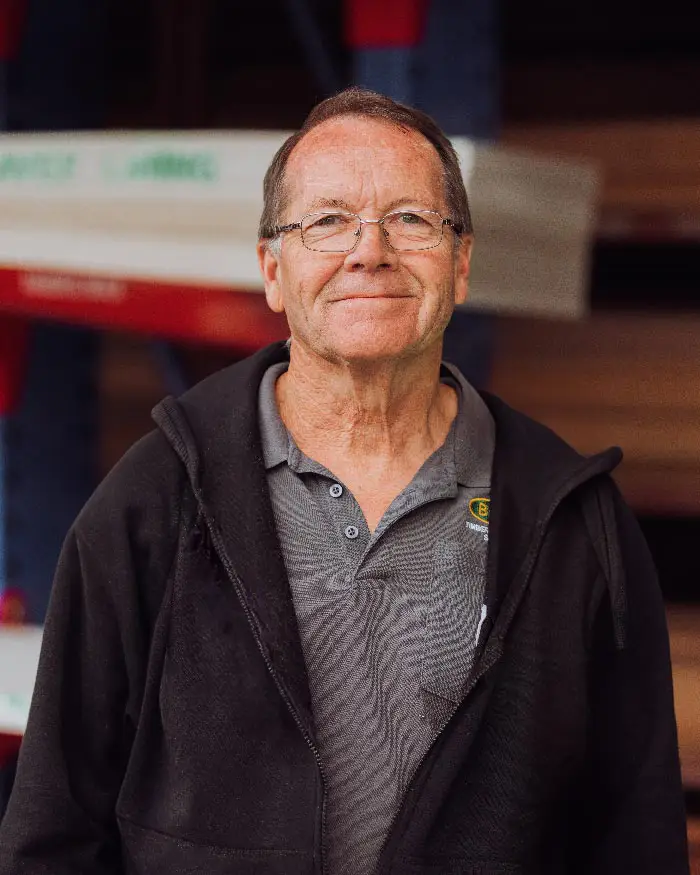
Timber Talks – Gary Gray
20 years as a tradie followed by 31 years with Bone Timber, hear what Gary Gray thinks makes Bone special.
In the construction industry, there’s no shortage of jargon — and getting it wrong can mean compliance issues, installation failures, or costly quoting mistakes.
At Bone Timber, we work closely with builders, architects, designers, quantity surveyors and trades to ensure the right materials are selected, specified and installed correctly.
This glossary explains commonly used timber and building terms relevant to:
• Architectural timber
• Interior joinery & mouldings
• Decking & external applications
• Structural & non-structural framing
• Machined, dressed & random length products
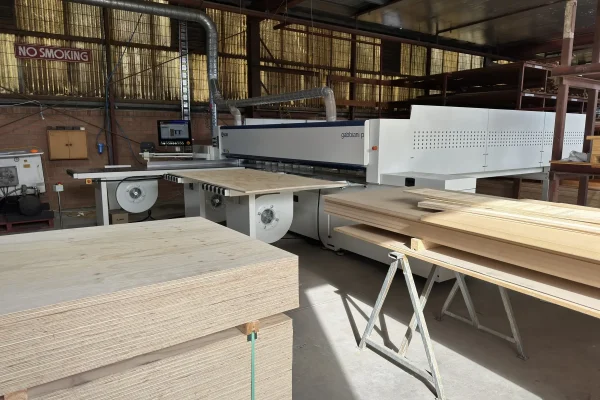
Choosing the right timber isn’t just about species or size, it’s about durability, stability, compliance, exposure conditions and correct application.
 Call Bone Timber: (08) 8297 8277
 Email our team: sales@bonetimber.com.au
Our Sales & Customer Service teams work with trade professionals every day and can assist with product selection, availability and technical considerations.
ACQ (Alkaline Copper Quaternary) – Modern timber preservative treatment widely used as a lower-toxicity alternative to CCA.
A-frame – Temporary triangular timber structure used for support, lifting or bracing.
Architrave – Decorative moulded trim installed around doors and windows to conceal joints and movement gaps.
Actual Size – The finished dimension of timber after dressing (smaller than nominal size).
Adhesive Failure – Separation in engineered timber due to glue bond breakdown.
Back sawn – Timber cut tangential to growth rings, typically producing cathedral grain patterns.
Barge board – Board fixed to gable ends to conceal roof framing and provide a finished edge.
Batten – Narrow timber strips used for fixing cladding, roofing, or panelling.
Bearer – Primary horizontal support member carrying joists in floors or decks.
Bevel – Angled cut or edge detail used for joins or visual refinement.
Bird board – Eaves closure board preventing pest or bird entry.
Blackbutt – Durable Australian hardwood frequently specified for decking and flooring, known for fire performance.
Blue board – Cement-based fibre sheet commonly used as cladding substrate or wall lining.
Blue pine – Treated radiata pine, dyed for identification, used in structural framing.
Bracing – Diagonal structural elements preventing racking or lateral movement.
Bullnose – Rounded timber edge profile commonly used on stair treads and decking.
Bushfire Attack Level (BAL) – Compliance rating defining exposure risk and material suitability.
Butt joint – Simple square-ended timber joint.
Blocking – Short timber pieces installed between framing members for stiffness or fixing support.
Cantilever – Structural member extending beyond its support.
CCA Treatment – Copper Chrome Arsenate preservative treatment for durability (legacy but still recognised).
Centres – Framing spacing measured from member midpoint to midpoint.
Chamfer – 45-degree edge cut for safety or detailing.
Chalk line – Marking tool for establishing straight lines.
Chipboard / Particleboard – Engineered board from compressed wood particles and resin.
Chippy – Trade slang for carpenter.
Cladding – Timber boards or panels forming external wall finishes.
Cumaru – Extremely dense imported hardwood used in high-wear external environments.
Cupping – Curvature across board width due to moisture imbalance.
Cypress Pine – Naturally termite-resistant Australian softwood used structurally and decoratively.
Checking – Surface cracking from drying stresses.
Clear Grade – Timber selected for minimal visual defects.
Dado – Lower wall section often finished with panelling or mouldings.
Decking – Boards designed for external walking surfaces.
Defects – Natural or machining irregularities (knots, splits, twist).
Delamination – Separation of bonded layers in engineered timber.
Dowel – Cylindrical timber pin used in joinery alignment.
Dressed All Round (DAR) – Timber machined smooth on all faces.
Dressed Timber – Planed timber with a finished surface.
Durability Class – Rating of timber’s natural resistance to decay and insects.
Density – Mass per volume influencing strength, durability and fixings behaviour.
End Grain – Exposed fibre structure at board ends.
End Matched – Boards with joining profiles machined into ends.
Engineered Timber – Manufactured products such as LVL, plywood and glulam.
Equilibrium Moisture Content (EMC) – Stable moisture level timber reaches in service conditions.
Edge Glued Panel – Board formed by bonding narrow timber strips.
Face – Visible or best-quality surface of timber.
Fascia – Board fixed to roof edges supporting gutters.
Fiddleback – Decorative wavy grain figure.
Finger Jointed (FJ) – Timber lengths joined using interlocking profiles.
Fire Retardant – Treatment or coating reducing flame spread.
Fixings – Nails, screws, bolts and connectors.
FOHC (Free of Heart Centre) – Timber milled away from log centre to improve stability.
Formply – Film-faced plywood for concrete formwork.
Framing Grade – Timber classification suitable for structural applications.
Gable – Triangular wall beneath a pitched roof.
Glulam (Glue-Laminated Timber) – Engineered structural beams made by bonding laminations.
Grade – Strength or appearance classification.
Green Timber – Unseasoned timber with high moisture content.
Grey Box / Grey Ironbark – Dense hardwoods suited to demanding external use.
Grain Direction – Fibre orientation affecting movement and machining.
Growth Rings – Annual tree growth layers influencing stability.
Hardboard – Compressed fibre sheet material.
Hardwood – Timber from broadleaf species, generally denser and more durable.
Hazard Classes (H1–H6) – Treatment categories defining exposure suitability.
Header – Load-transferring beam over openings.
Heartwood – Inner timber with enhanced natural durability.
Handrail – Safety rail installed along stairs or decks.
Hygroscopic – Property of timber to absorb/release moisture.
I-Joist – Engineered structural member with high strength-to-weight efficiency.
Ironbark – Exceptionally hard Australian hardwood.
Interlocking Grain – Alternating fibre direction affecting finish quality.
Janka Hardness – Measure of timber resistance to denting and wear.
Jarrah – Durable WA hardwood prized for stability and appearance.
Joist – Horizontal support member for flooring or decking.
Joist Hanger – Metal bracket securing joists.
Karri – Australian hardwood used in structural and appearance applications.
Kiln-Dried (KD) – Timber dried in controlled conditions for stability.
Kiln Burn – Discolouration from drying irregularities.
Lintel – Structural beam across openings.
Load Bearing – Structural component designed to carry loads.
LOSP Timber – Light Oil Surface Preservative treated timber for above-ground exposure.
LVL (Laminated Veneer Lumber) – Engineered high-stability structural timber.
Lyctine Susceptible – Timber prone to lyctine borer attack.
Lamination – Bonded timber layers forming structural members.
MDF (Medium Density Fibreboard) – Engineered board for joinery and interiors.
Merbau – Popular durable hardwood decking species.
Mitre Joint – Angled corner joint.
Moisture Content (MC) – Water percentage affecting timber behaviour.
Mouldings – Profiled finishing trims.
Movement – Dimensional change from moisture variation.
Machine Stress Graded (MSG) – Structurally graded timber assessed mechanically.
Nogging – Short bracing pieces between studs.
Nominal Size – Pre-dressed timber dimension reference.
Non-Load Bearing – Component not designed to carry structural loads.
Nosing – Rounded stair tread edge.
Oregon (Douglas Fir) – Structural softwood used in beams and framing.
OSB (Oriented Strand Board) – Engineered structural sheet product.
Overlay Flooring – Thin timber flooring installed over substrate.
Parquetry – Patterned timber flooring system.
Plywood – Cross-laminated veneer sheet product.
Plank – Long wide timber board.
Plinth – Protective base board at wall junctions.
Plate (Top/Bottom) – Horizontal framing members.
Posts – Vertical structural supports.
Porous – Material prone to moisture absorption.
Prime – Initial protective coating.
Preservative Treatment – Chemical processes improving durability.
Quad – Quarter-round trim moulding.
Quarter-Sawn Timber – Timber cut for improved dimensional stability.
Radiata Pine – Widely used Australian plantation softwood.
Ridge Beam – Primary roof apex beam.
Rough-Sawn Timber – Undressed timber with textured finish.
Random Length – Timber supplied in varied lengths.
Riser – Vertical stair component.
Racking – Lateral structural distortion resisted by bracing.
Sapwood – Outer lighter timber layer.
Seasoned Timber – Timber dried for stability.
Secret Nailing – Concealed fixing method.
Select Grade – Higher appearance classification.
Shrinkage – Size reduction from drying.
Skirting – Internal perimeter moulding.
Softwood – Timber from conifer species.
Span – Distance between structural supports.
Span Table – Engineering reference for load capacity.
Stud – Vertical framing member.
Structural Timber – Timber graded for load-bearing use.
Surface Check – Minor drying crack.
Tallowwood – Dense Australian hardwood suited to wet conditions.
Tannins – Natural compounds causing staining/leaching.
Termite Resistant – Timber naturally or chemically protected.
Timber Frame – Structural system built from timber members.
Tongue & Groove (T&G) – Interlocking board profile.
Treated Pine – Pine preserved for durability.
Truss – Engineered structural framework.
Twist – Spiral distortion along timber length.
Underlay – Sub-layer beneath flooring.
Uniform Grain – Consistent fibre pattern.
Unseasoned Timber – High-moisture timber prone to movement.
Veneer – Thin timber sheet for appearance or stability.
V-Joint (VJ) – Decorative joint profile.
Void – Empty structural cavity.
Warping – Distortion from moisture imbalance.
Weatherboards – External overlapping cladding boards.
Western Red Cedar – Lightweight stable cladding timber.
Wind Load – Structural force consideration.
Workability – Ease of machining or fixing.
Wane – Missing wood or bark edge.
Wet Service Conditions – Environments with sustained moisture exposure.
Zoning (Building) – Local planning controls affecting construction methods and materials.
Whether you’re quoting, specifying, designing or building — our team can help you select the right timber, treatment level, profile or structural solution.
(08) 8297 8277 sales@bonetimber.com.au
✔ Trade-focused advice
✔ Product & stock guidance
✔ Machining & custom capability
✔ Local manufacturing expertise
20 years as a tradie followed by 31 years with Bone Timber, hear what Gary Gray thinks makes Bone special.

Meet Paul Aitchison – our resident Timber Expert and Service Guru here to shape your perfect project.

Which timber moulding should you opt for in your next project? Let’s take at look at some pros and cons.